

our poems HERE …
none yet
@@@@@@@@@
story in short –
… So, after the episode of Ariadne running off with Theseus who had just killed her brother, the Minotaur, Daedalus is in trouble. But he is still stuck on Crete, kept from leaving by Minos who finds him just too useful to either kill or let go.
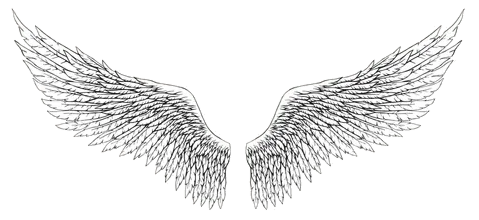
He can’t leave by land because Crete is an island and he can’t leave by water because all shipping is controlled by Minos so the thoughts of the Inventor turn to the air above and he starts building wings for himself and for his son, Icarus, out of bird feathers and wax .
When he has finished building these wings, he gives his son a whole set of instructions, the main ones being not to fly too low over the sea as the wings would get soggy and weigh him down and not to fly too high as the feathers would get burned up by the sun. Basically just to follow him.

They set off from Crete and travelled North .. they flew across the Aegean sea with the father leading and the son following and they crossed the open water, flying like seabirds, into the Dodecanese.
A ploughman saw them fly overhead and though they were gods.
Delos and Paros were behind them but with Samos, sacred to Juno in sight, the boy in the delight of his flying could not resist flying upwards toward the heavens and the wax holding the feathers melted and one they fell off one by one until he was waving his bare arms like oars at which point he plummeted down into the sea

Daedalus realised that his son was not behind him, called out to him “‘Icarus, Icarus where are you? Which way should I look, to see you?’
Then he looked down and saw the feathers on the water and cursed his invention. He buried his boy on the nearest Island which he called “Icaria” after Icarus


Ariadne on Naxos BACK –  NEXT- Perdix
Bk VIII:183-235 Daedalus and Icarus
Meanwhile Daedalus, hating Crete, and his long exile, and filled with a desire to stand on his native soil, was imprisoned by the waves. ‘He may thwart our escape by land or sea’ he said ‘but the sky is surely open to us: we will go that way: Minos rules everything but he does not rule the heavens’. So saying he applied his thought to new invention and altered the natural order of things. He laid down lines of feathers, beginning with the smallest, following shorter with longer ones, so you might think they had grown like that, on a slant. In this way, long ago, the rustic pan-pipes were graduated, with lengthening reeds. Then he fastened them together with thread at the middle, and bees’-wax at the base, and, when he had arranged them, he flexed each one into a gentle curve, so that they imitated real bird’s wings. His son, Icarus, stood next to him, and, not realising that he was handling things that would endanger him, caught laughingly at the down that blew in the passing breeze, and softened the yellow bees’-wax with his thumb, and, in his play, hindered his father’s marvellous work.
When he had put the last touches to what he had begun, the artificer balanced his own body between the two wings and hovered in the moving air. He instructed the boy as well, saying ‘Let me warn you, Icarus, to take the middle way, in case the moisture weighs down your wings, if you fly too low, or if you go too high, the sun scorches them. Travel between the extremes. And I order you not to aim towards Bootes, the Herdsman, or Helice, the Great Bear, or towards the drawn sword of Orion: take the course I show you!’ At the same time as he laid down the rules of flight, he fitted the newly created wings on the boy’s shoulders. While he worked and issued his warnings the ageing man’s cheeks were wet with tears: the father’s hands trembled.
He gave a never to be repeated kiss to his son, and lifting upwards on his wings, flew ahead, anxious for his companion, like a bird, leading her fledglings out of a nest above, into the empty air. He urged the boy to follow, and showed him the dangerous art of flying, moving his own wings, and then looking back at his son. Some angler catching fish with a quivering rod, or a shepherd leaning on his crook, or a ploughman resting on the handles of his plough, saw them, perhaps, and stood there amazed, believing them to be gods able to travel the sky.
And now Samos, sacred to Juno, lay ahead to the left (Delos and Paros were behind them), Lebinthos, and Calymne, rich in honey, to the right, when the boy began to delight in his daring flight, and abandoning his guide, drawn by desire for the heavens, soared higher. His nearness to the devouring sun softened the fragrant wax that held the wings: and the wax melted: he flailed with bare arms, but losing his oar-like wings, could not ride the air. Even as his mouth was crying his father’s name, it vanished into the dark blue sea, the Icarian Sea, called after him. The unhappy father, now no longer a father, shouted ‘Icarus, Icarus where are you? Which way should I look, to see you?’ ‘Icarus’ he called again. Then he caught sight of the feathers on the waves, and cursed his inventions. He laid the body to rest, in a tomb, and the island was named Icaria after his buried child.
Bk VIII:236-259 The death of Talos
As he was consigning his unfortunate son to the grave, a noisy partridge poked its head out from a muddy ditch, and, called, cackling joyfully, with whirring wings. It was the only one of its kind, not seen in previous years, and only recently made a bird, as a lasting reproach to you, Daedalus. Your sister, Perdix, oblivious to the fates, sent you her son, Talus, to be taught: twelve years old, his mind ready for knowledge. Indeed, the child, studying the spine of a fish, took it as a model, and cut continuous teeth out of sharp metal, inventing the use of the saw. He was also the first to pivot two iron arms on a pin, so that, with the arms at a set distance, one part could be fixed, and the other sweep out a circle. Daedalus was jealous, and hurled the boy headlong from Minerva’s sacred citadel, claiming that he had fallen. But Pallas Minerva, who favours those with quick minds, caught him, and turned him into the partridge, masking him with feathers in mid-air. His inborn energy was transferred to swift wings and feet, and he kept his mother’s name, Perdix, from before. But the bird does not perch above the ground, and does not make its nest on branches or on high points, but flies low on whirring wings over the soil, and lays its eggs in a sheltered place.
<<<<<<<<<<<<<<<<<<<<<<<<<<<<<<
HOME
<<<<<<<<<<<<<<<<<<<<<<<<<<<<<<
 thingstothings